Multi-Zone Mini Split Sizing
Enter the square feet of each room you want to cool, pick your state, and get the BTU/h for each indoor head and the size of the outdoor condenser that feeds them.
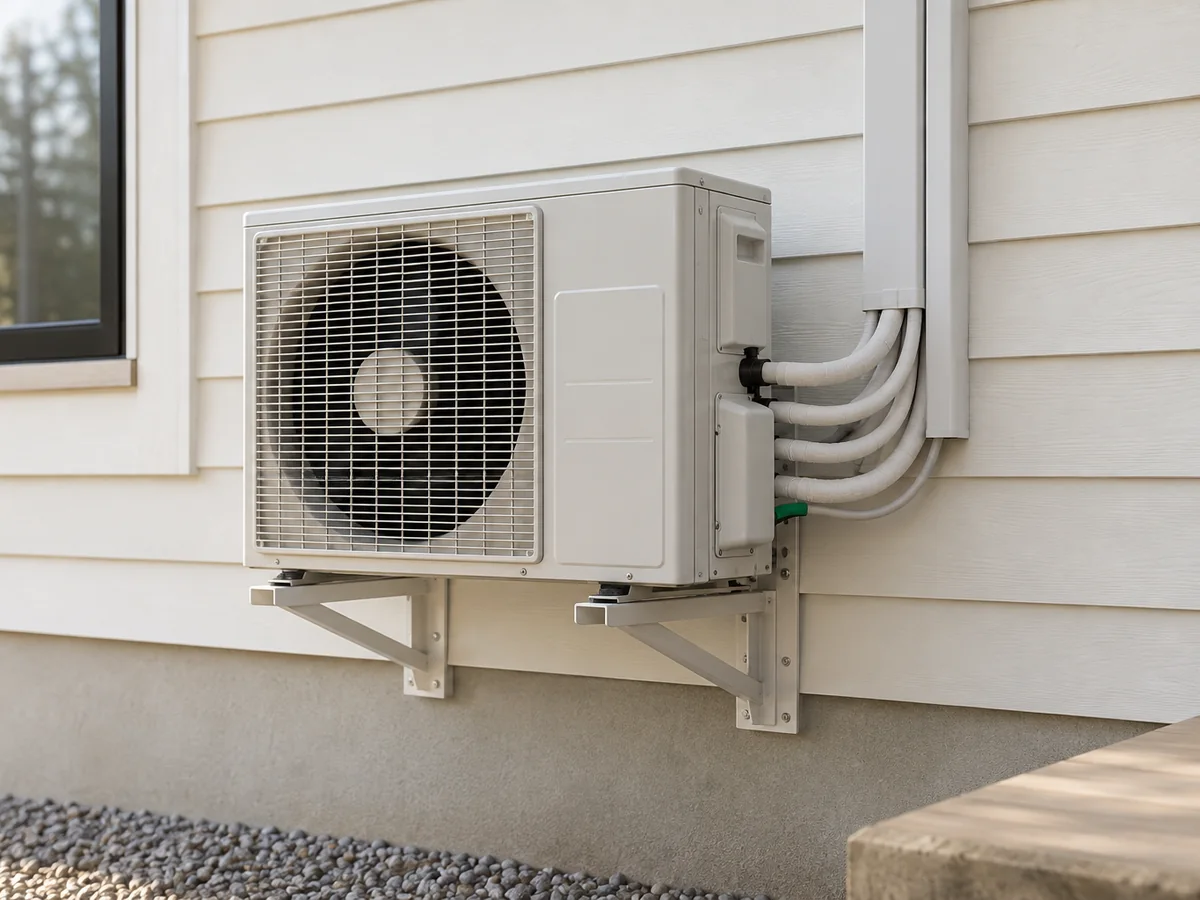
Multi-zone mini split
C03Scenario A
Sets the electricity rate. Pick US average if you're not sure.
From EIA for US average. Use the rate on your bill if you know it.
Rate used: 18.4¢/kWh · US average · EIA reference 2025–26 · climate zone 4 (data as of 2026-09-26) ·
Separate the areas with commas, e.g. 300, 200, 150.
Outdoor unit (condenser) size
3 heads totalling 13,000 BTU; zones rarely call for full cooling at once, so the condenser can be smaller.
- BTU per zone
- 6,000, 4,000, 3,000
- Total of all zones
- 13,000
- Outdoor unit (÷ 1.3 diversity factor)
- 10,000 BTU
- Next condenser size up
- 24,000 BTU
- Indoor heads
- 3 (many lines start at 9,000 BTU)
Estimate. Formula and sources are under “How it works”. Change any input; the result updates as you type.
Formula
How it works
- BTU/h per zone = square feet × 20 × zone factor (zone 1 = 1.3 … zone 4 = 1.0 … zones 7 and 8 = 0.8)
- Total = sum of all zones
- Condenser ≈ total ÷ 1.3
Rooms rarely all need full cooling at the same moment: the sunny living room peaks in the afternoon, the bedrooms at night. That's why manufacturers let the indoor heads add up to about 1.3 times the condenser's rating. The calculator divides by 1.3 to get the smallest condenser that can serve your heads; the model you buy is the next size up in that brand's line.
Sources: 20 BTU/sq ft base: ENERGY STAR room AC sizing. Diversity factor 1.2–1.3: manufacturer multi-zone combination tables. Climate zone: IECC 2021 (DOE/PNNL).
Worked example
A worked example
Arizona is climate zone 2, so each square foot needs 24 BTU/h. The four rooms need 9,600, 6,000, 6,000, 4,800 BTU/h, a total of 26,400. Divided by the 1.3 diversity factor, the condenser needs about 20,308 BTU, so you'd look at the next condenser size up. The system has 4 indoor heads.
Reference
By state, at the default inputs
Outdoor unit (condenser) size, with this page's default inputs and each state's reference prices (EIA reference 2025–26, data as of 2026-09-26).
| US average | 10,000 BTU | 18.4¢/kWh |
|---|---|---|
| Alabama | 11,000 BTU | 15.5¢/kWh |
| Alaska | 8,000 BTU | 25.0¢/kWh |
| Arizona | 12,000 BTU | 15.0¢/kWh |
| Arkansas | 11,000 BTU | 13.0¢/kWh |
| California | 11,000 BTU | 32.0¢/kWh |
| Colorado | 9,000 BTU | 16.0¢/kWh |
| Connecticut | 9,000 BTU | 30.0¢/kWh |
| Delaware | 10,000 BTU | 17.0¢/kWh |
| District of Columbia | 10,000 BTU | 19.0¢/kWh |
| Florida | 12,000 BTU | 15.0¢/kWh |
| Georgia | 11,000 BTU | 14.5¢/kWh |
| Hawaii | 13,000 BTU | 42.0¢/kWh |
| Idaho | 9,000 BTU | 12.0¢/kWh |
| Illinois | 9,000 BTU | 17.0¢/kWh |
| Indiana | 9,000 BTU | 15.5¢/kWh |
| Iowa | 9,000 BTU | 13.5¢/kWh |
| Kansas | 10,000 BTU | 14.5¢/kWh |
| Kentucky | 10,000 BTU | 13.0¢/kWh |
| Louisiana | 12,000 BTU | 12.5¢/kWh |
| Maine | 8,500 BTU | 26.0¢/kWh |
| Maryland | 10,000 BTU | 19.0¢/kWh |
| Massachusetts | 9,000 BTU | 29.0¢/kWh |
| Michigan | 9,000 BTU | 19.5¢/kWh |
| Minnesota | 8,500 BTU | 15.5¢/kWh |
| Mississippi | 11,000 BTU | 13.5¢/kWh |
| Missouri | 10,000 BTU | 13.0¢/kWh |
| Montana | 8,500 BTU | 13.0¢/kWh |
| Nebraska | 9,000 BTU | 12.0¢/kWh |
| Nevada | 11,000 BTU | 15.0¢/kWh |
| New Hampshire | 8,500 BTU | 27.0¢/kWh |
| New Jersey | 10,000 BTU | 22.0¢/kWh |
| New Mexico | 10,000 BTU | 15.0¢/kWh |
| New York | 9,000 BTU | 25.0¢/kWh |
| North Carolina | 11,000 BTU | 14.5¢/kWh |
| North Dakota | 8,000 BTU | 11.5¢/kWh |
| Ohio | 9,000 BTU | 16.5¢/kWh |
| Oklahoma | 11,000 BTU | 13.0¢/kWh |
| Oregon | 10,000 BTU | 14.5¢/kWh |
| Pennsylvania | 9,000 BTU | 18.5¢/kWh |
| Rhode Island | 9,000 BTU | 29.0¢/kWh |
| South Carolina | 11,000 BTU | 15.0¢/kWh |
| South Dakota | 8,500 BTU | 13.0¢/kWh |
| Tennessee | 10,000 BTU | 13.5¢/kWh |
| Texas | 12,000 BTU | 15.5¢/kWh |
| Utah | 9,000 BTU | 12.0¢/kWh |
| Vermont | 8,500 BTU | 22.0¢/kWh |
| Virginia | 10,000 BTU | 15.5¢/kWh |
| Washington | 10,000 BTU | 12.0¢/kWh |
| West Virginia | 9,000 BTU | 15.5¢/kWh |
| Wisconsin | 8,500 BTU | 17.5¢/kWh |
| Wyoming | 8,500 BTU | 12.5¢/kWh |
Questions
FAQ
Can I run 4 heads on a 36,000 BTU condenser?
With a 1.3 diversity factor, a 36,000 BTU condenser can carry heads that add up to about 46,800 BTU. Four 9,000 BTU heads (36,000 total) or three 12,000 plus one 9,000 (45,000) fit; four 12,000 heads (48,000) don't. Check the combination table for your exact model.
Multi-zone or several single-zone mini splits?
One condenser means one unit outside, but if it fails, every room loses cooling. Separate single-zone systems each need their own outdoor unit and none of them shares capacity. The per-room sizing math is the same either way; get installed quotes for both layouts to compare the price.
Why is the condenser smaller than the sum of the heads?
Because the rooms don't peak together. In the US-average default (300, 200 and 150 sq ft) the heads need 13,000 BTU/h in total, but the condenser only needs about 10,000 BTU.
What's the smallest indoor head?
Many multi-zone lines start their wall heads at 9,000 BTU, so a small room often gets a head larger than it needs. In the default example, the 150 sq ft room needs 3,000 BTU/h. Check the smallest head your brand offers.
How big a system for a 4-bedroom layout?
Four rooms of 400, 300, 250 and 200 sq ft at the US average need 8,000, 6,000, 5,000 and 4,000 BTU/h: 23,000 BTU/h in total, and a condenser of about 17,692 BTU before you round up.
Related