How Long To Charge an EV
Pick your EV, where the battery is now and where you want it, and the charger, and get the kWh to add, the time it takes and the miles you get back per hour of charging.
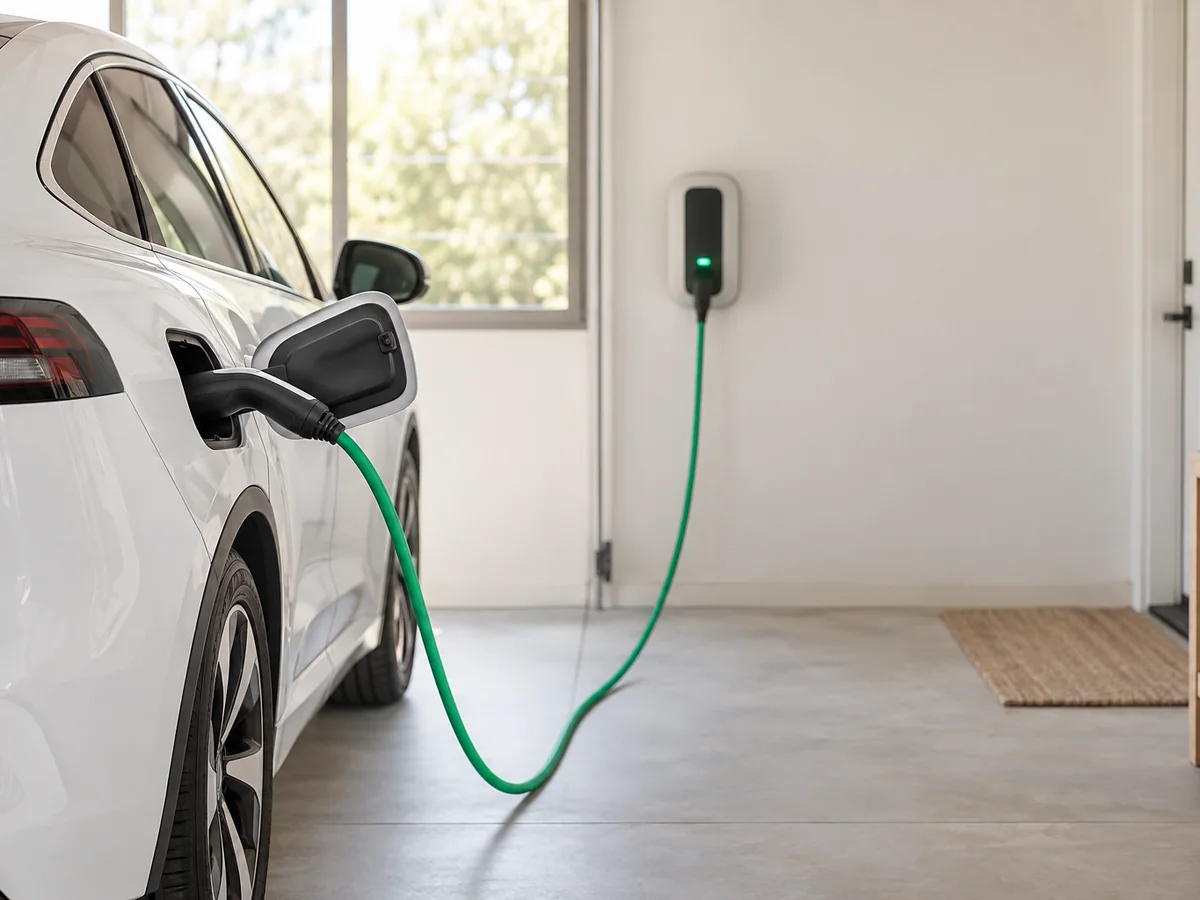
EV charge time
F05Scenario A
Level 1 1.4 · Level 2 at 32 A ≈ 7.7, at 48 A 11.5 · DC fast 50–350 kW (limited by the car).
Estimated charging time
45.0 kWh from 20% to 80% at 7.2 kW.
- kWh to add
- 45.0
- Charging time
- 6.9 h
- Miles added per hour of charging
- 23 mi/h
Estimate. Formula and sources are under “How it works”. Change any input; the result updates as you type.
Formula
How it works
- kWh to add = battery size × (to % − from %) ÷ 100
- Charging time = kWh to add ÷ (charger kW × 0.9)
- Miles added per hour = charger kW × 0.9 ÷ (kWh per 100 miles ÷ 100)
The 0.9 accounts for losses in the charger and the car: about 10% of the power never reaches the battery. Times over 24 hours are shown in days.
For DC fast charging, the result assumes the charger's full power the whole time. In practice the car limits power and slows down as the battery fills, especially above 80%, so real fast-charging sessions take longer than this estimate.
Sources: battery sizes and kWh/100 mi from EPA fueleconomy.gov and manufacturers' specs; charger power levels: Level 1 1.4 kW, Level 2 at 32 A 7.7 kW, at 48 A 11.5 kW.
Worked example
A worked example
Taking an F-150 Lightning's 131 kWh battery from 10% to 90% means adding 104.8 kWh. On a regular outlet at 1.4 kW, that takes about 3.5 days. Level 1 adds about 3 miles of range per hour of charging, which is why a big truck needs a Level 2 charger.
Questions
FAQ
Can I charge an EV on a regular outlet?
Yes, slowly. A Tesla Model Y Long Range from 20% to 80% on a 1.4 kW outlet takes about 1.5 days and adds about 4 miles per hour of charging. For someone who drives 30–40 miles a day and plugs in every night, that can be enough.
How fast is Level 2?
At 7.2 kW, the same Model Y goes from 20% to 80% in about 6.9 hours, adding about 23 miles per hour: an overnight charge. At 11.5 kW it's about 4.3 hours.
Why does DC fast charging slow down after 80%?
The car's battery management cuts the power as the cells fill, to protect the battery. That's why road trips usually charge to about 80% and move on. This calculator doesn't model that taper.
Does charging speed change the cost?
Not at home: the kWh are the same. Fast chargers on the road usually charge a higher price per kWh. See the EV charging cost calculator.
Why do you use 0.9?
Some energy is lost as heat in the charger and the battery. We use 10% as a round figure for all charger types.
Related