Gas vs Electric Heating Cost in Nevada
In Nevada, a 2,000 sq ft house with average insulation costs an estimated $695.74 a year to heat with a 92% gas furnace, $1,878.92 with electric resistance heat and $606.10 with a heat pump. Here the heat pump line comes in lowest: $12.03 per MMBtu of heat against $13.80 for gas.
State data
What Nevada pays
- Electricity
- 12.7¢/kWhEIA Electric Power Monthly, table 5.6.A · EIA, August 2026 (data as of 2026-10-25)
- Natural gas
- $1.27/thermEIA, residential natural gas price ($/Mcf ÷ 10.37) · EIA 2025 annual average (data as of 2026-10-25)
- Heating degree-days
- 3,000 °F-days (base 65 °F)NOAA CPC, 1991–2020 normals
- Climate zone
- 3 (IECC 2021)DOE/PNNL · heat pump seasonal COP used: 3.1
Nevada's rate of 12.7¢/kWh is the lowest among the 50 states and DC; every electric option on this page is priced from it. Residential gas in Nevada is $1.27/therm, 14% below the US average of $1.48/therm. A winter of 3,000 heating degree-days means the 2,000 sq ft example in Nevada needs about 50.4 MMBtu of heat a year.
Prices are statewide averages. Type the rate and gas price from your own bill into the calculator above to replace them.
How homes here heat
Heating in a cooling state: Nevada
- Main heating fuel
- Natural gas 68% · electricity 23% · propane not reported · fuel oil not reportedEIA RECS 2020, state tables · share of homes
- Main heating equipment
- Furnace 74% · central heat pump 7% · boiler not reportedEIA RECS 2020, state tables · share of homes
- Homes using a secondary heater
- 40%EIA RECS 2020, state tables
- Household energy spend
- $1,690 a year, of which $292 on space heating (17%)EIA RECS 2020, state tables · average per household
- Share of home energy that is space heating
- 48% of natural gas use · 5% of electricity useEIA RECS 2020, state tables
The average Nevada household spends more to cool its home than to heat it. The 2020 survey puts air conditioning at $415 a year, 23% of the bill, and space heating at $292, or 17%. That heating figure is the 6th-lowest among the states and sits below the national $519; its share of the bill is the 6th-lowest as well. Winters are short: 3,000 heating degree-days, 33% fewer than the US average of 4,500.
The heat that is needed mostly comes from gas. Natural gas is the main heating fuel in 68% of homes, about 780,000, the 12th-highest gas share among the states, while electricity heats 23%, a smaller share than the US figure of 34%. Propane and oil are too rare to be reported. Furnaces dominate the equipment, 74% of homes against 60% nationally, and central heat pumps are in only 7%, about 80,000 homes, the 10th-lowest share among the 33 states that report one.
Electricity barely touches heat in this state: just 5% of household power goes to it, against 12% for the US, and even gas, the main heating fuel, sends only 48% of its use to space heat, where the national share is 68%. Water heating, at $241, is not far behind the $292 spent on space heat.
EIA RECS 2020, state tables: shares of all occupied homes in the state and average spending per household in the survey year. "Not reported" means EIA's sample was too small to publish a figure.
Gas vs electric heat
B04Scenario A
Sets the electricity rate. Pick US average if you're not sure.
From EIA for Nevada. Use the rate on your bill if you know it.
Rate used: 12.7¢/kWh · Nevada · EIA, August 2026 · gas $1.27/therm (EIA 2025 annual) · 3,000 heating degree-days · climate zone 3 (data as of 2026-10-25) ·
On the furnace label: 0.80 older, 0.90–0.98 condensing.
Gas furnace costs less per year by
Electric resistance: $1,878.92 a year · Gas furnace: $695.74 a year, for 50.4 MMBtu of heat.
- Yearly heating load
- 50.4 MMBtu
- Electric resistance, $ per MMBtu
- $37.28
- Gas furnace, $ per MMBtu
- $13.80
- Electric resistance, per year
- $1,878.92
- Gas furnace, per year
- $695.74
- Difference per year (Gas furnace − Electric resistance)
- −$1,183.18
- Seasonal heat pump COP used
- 3.1
- Prices used
- electricity 12.7¢/kWh · gas $1.27/therm · propane $3.00/gal · oil $3.60/gal
- Heat pump, per year (for reference)
- $606.10
Cost by month, in season only
The yearly cost spread across the months using a typical heating degree-day pattern from NOAA 1991–2020 normals. Months outside the season show $0.
Estimate. Formula and sources are under “How it works”. Change any input; the result updates as you type.
2026 note: The federal 25C and 25D tax credits ended for installations after Dec 31, 2025. Our numbers use 2026 rules. State rebates, HEAR/HOMES programs and utility programs may still apply.
Worked example
Worked example: 2,000 sq ft in Nevada
A 2,000 sq ft house with average insulation in Nevada needs about 50.4 MMBtu of heat a year (3,000 heating degree-days). At $1.27/therm in a 92% furnace, gas delivers that heat at $13.80 per MMBtu; resistance heat at 12.7¢/kWh costs $37.28, and a heat pump at seasonal COP 3.1 (zone 3) costs $12.03. The year comes to $695.74 on gas, $1,878.92 on resistance heat and $606.10 on a heat pump. The heat pump is the cheapest to run here, by $89.64 a year over gas.
Load = sq ft × 0.35 × heating degree-days × 24 ÷ 1,000,000. Gas $/MMBtu = $/therm ÷ 0.1 ÷ 0.92. Resistance $/MMBtu = $/kWh × 293.07. Heat pump = resistance ÷ COP.
What the numbers say
Gas or heat pump at Nevada prices
On these averages a heat pump runs cheaper than a gas furnace, and the reason is the electric rate. At 12.7¢/kWh, 30% below the US average of 18.2¢/kWh, Nevada has the lowest residential electricity price of any state. Gas costs $1.27/therm, also below average (14% below the US average of $1.48/therm), but the mild winter lets the calculator use a climate-zone 3 seasonal COP of 3.1, and at that efficiency the cheap power wins: a heat pump by $89.64 a year for the example house.
The margin is real but thin, because the heating season is short and the yearly heating bill is small either way. The tie rate is 14.6¢/kWh, against a statewide average of 12.7¢/kWh. A summer-peak or time-of-use tariff can price winter evening power above or below the average; whichever rate you pay for heat is the one to enter in the calculator above.
The stronger case for a heat pump here is the other season. A household already spends $415 on cooling, so replacing an aging central air conditioner and a furnace with one heat pump is a decision about both bills, not about heating alone. The heat pump vs furnace calculator compares the two systems over their life, and the heat pump size calculator checks the capacity a house needs.
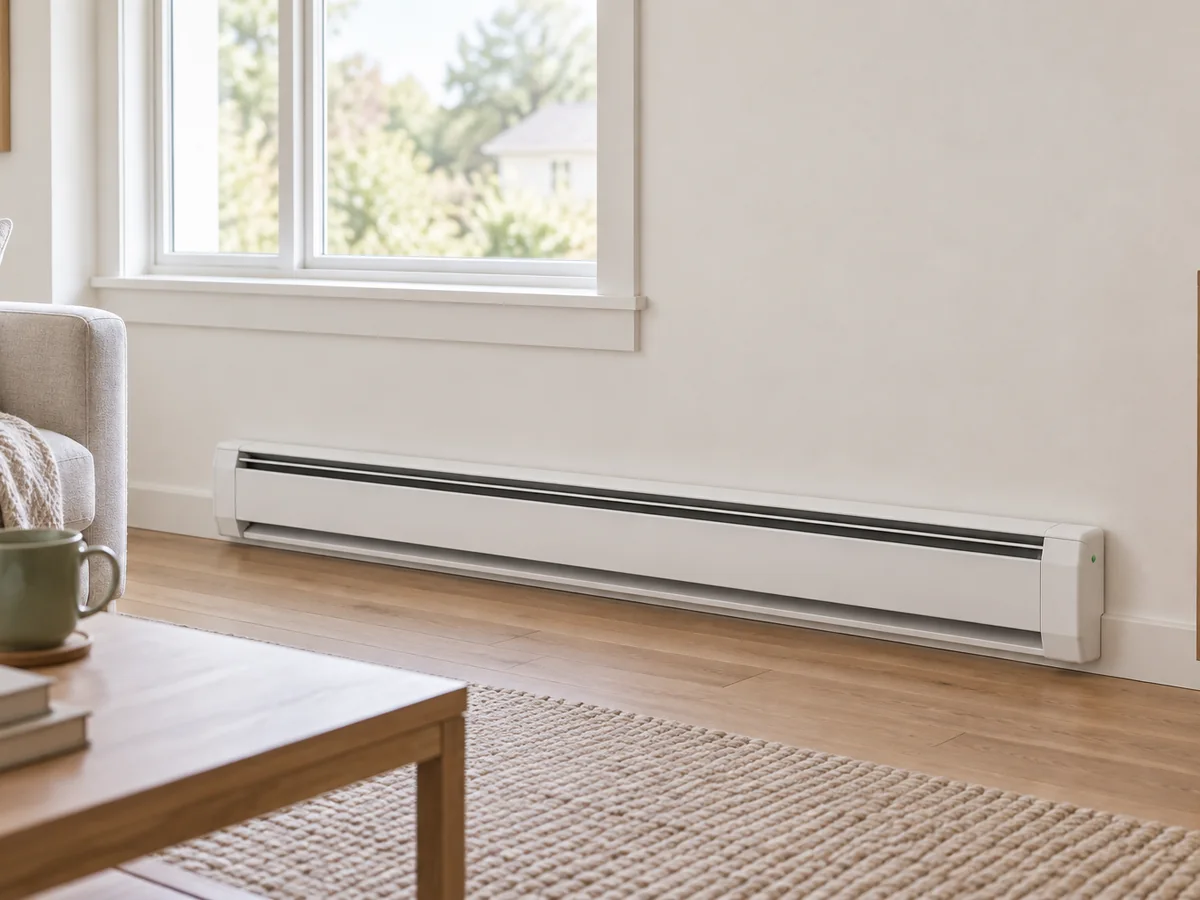
Electric resistance is the one setup to avoid on cost: at 2.7 times the price of gas per unit of heat, a space heater or baseboard loses to both. The survey's $292 covers every home, including apartments that barely heat, so it runs under the calculator's estimate for a 2,000 sq ft house; your own winter bills are the better benchmark.
Questions
FAQ
Which is cheaper in Nevada, gas or electric heat?
Electric resistance heat is the most expensive of the three in Nevada: $1,878.92 a year for the 2,000 sq ft example, $1,183.18 more than gas. Between gas ($695.74) and a heat pump ($606.10), the heat pump is cheaper here: its heat costs $12.03 per MMBtu, gas $13.80. These are estimates at 12.7¢/kWh and $1.27/therm; your bill's prices can change the answer.
How much gas does a furnace use in Nevada?
About 548 therms a year for a 2,000 sq ft house with average insulation and a 92% furnace, at Nevada's 3,000 heating degree-days. That averages 46 therms a month over 12 months, but almost all of it is burned in the heating months. At $1.27/therm, the year costs an estimated $695.74.
Electric furnace vs gas furnace cost in Nevada?
An electric furnace is resistance heat: every kWh gives 3,412 BTU. At 12.7¢/kWh, that heat costs $37.28 per MMBtu in Nevada, against $13.80 from a 92% gas furnace at $1.27/therm, 2.7 times as much. For the 2,000 sq ft example that's $1,878.92 a year against $695.74.
Does a heat pump make sense in Nevada if I already have a gas furnace?
On running cost the estimate favors it narrowly: $89.64 a year for the example house, which holds while your rate stays under 14.6¢/kWh. With heating this small a slice of the bill, 17% in the survey, the bigger factor is usually cooling. If your central air is due for replacement, a heat pump covers both, and that is the comparison worth running.
Why is my summer bill in Nevada bigger than my winter bill?
That is the norm here. The survey's average household spends $415 a year on air conditioning and $292 on space heating, and the state's 3,000 heating degree-days rank the 41st-highest among the states. The electric bill estimator breaks a bill into appliances if you want to see where the summer kilowatt-hours go.
Bordering states
Nearby states
Same calculator, same house, each state's own prices and winter:
Related