Electric vehicles · 6 calculators
Electric vehicles: charging cost, EV vs gas, and the practical numbers
What charging costs at your state's electricity rate, what it replaces at your state's gasoline price, and how long, how far and how much to install.
Cost to drive

Charging at home
How these calculators work
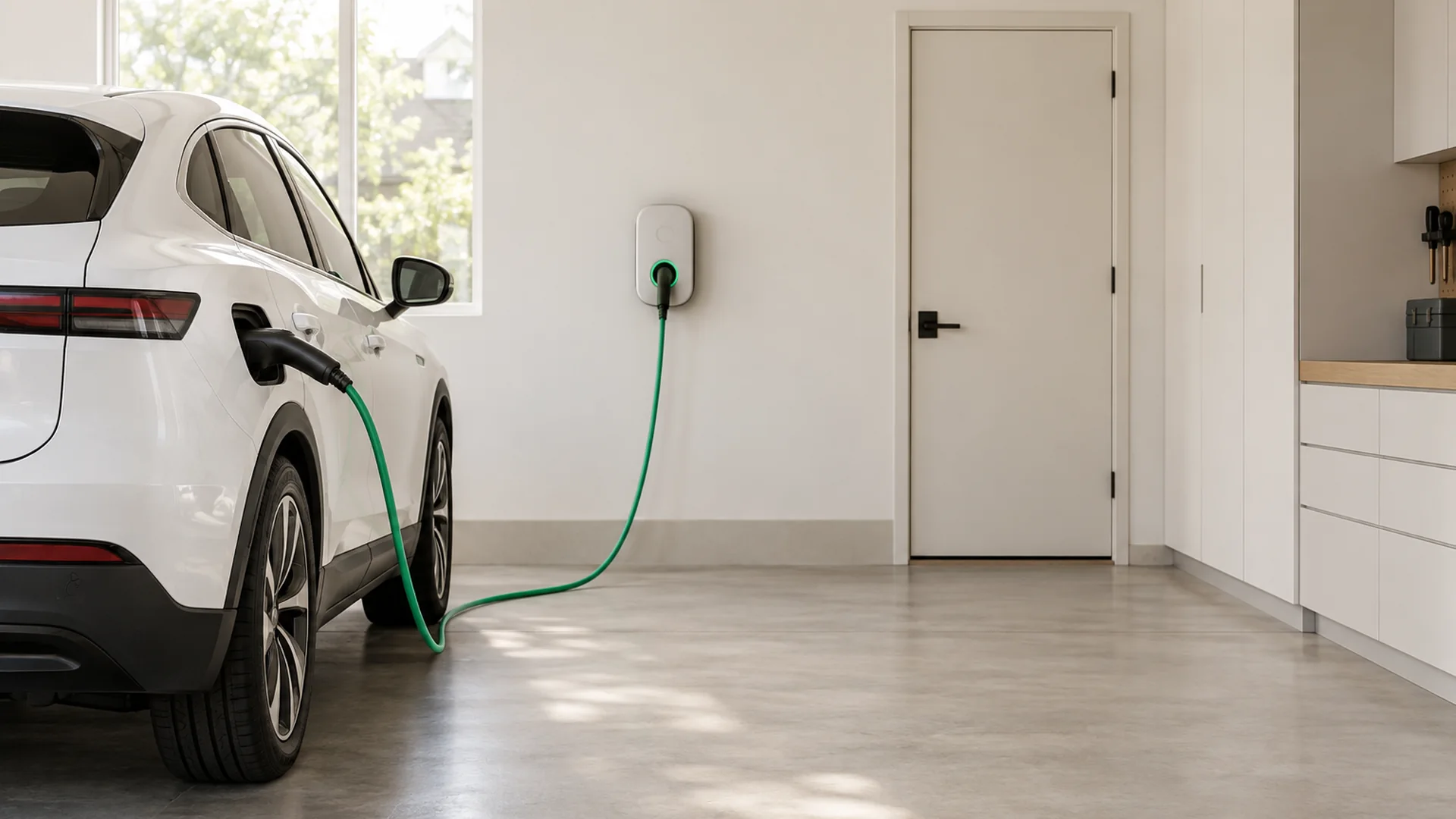
An EV's fuel cost comes down to two prices and one efficiency figure: your home electricity rate, the gasoline price it replaces, and how many kWh the car uses per 100 miles on its EPA sticker. Both prices vary a lot by state, so a national average says little about your case.
Take California, at 32.0¢/kWh and $4.70 a gallon. An F-150 Lightning costs about $0.172 a mile to charge at home; a 20 mpg gas truck costs $0.235 a mile in fuel. Over 12,000 miles that's $2,064.38 against $2,820.00. In Texas, at 15.5¢/kWh and $2.80 a gallon, a Tesla Model 3 RWD costs $0.043 a mile against $0.093 for a 30 mpg car. We add about 12% to every EV figure for charging losses between the wall and the battery.
Charging cost per month depends on the model and your miles: a Tesla Model Y Long Range driven 1,000 miles a month, charged 85% at home, uses about 267 kWh and costs an estimated $49.05 at the US average rate. An overnight time-of-use rate lowers that in direct proportion.
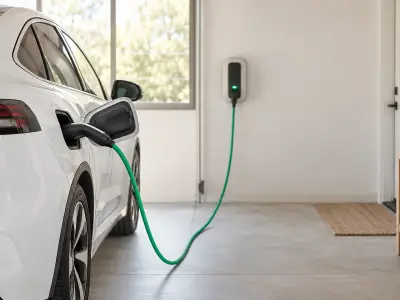
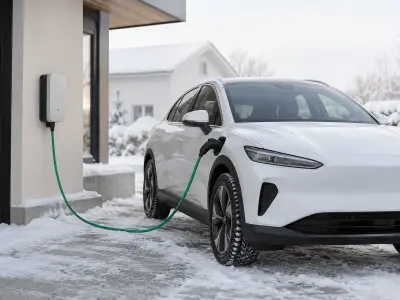
The practical questions have their own pages. A Level 2 installation is mostly the electrician: from about $1,150 with the charger next to a ready panel to over $5,000 with a panel upgrade. A regular outlet adds about 3 miles of range per hour to a big truck. And at 0 °F, an EV with a heat pump keeps about 70% of its rated range.
These are estimates of energy cost, not total cost of ownership. The 5-year comparison adds maintenance but leaves out the purchase price on purpose. The federal 30C credit for home chargers ended for chargers placed in service after June 30, 2026; utility rebates may still apply.