Cooling · 9 calculators
Cooling: size it right, then see what it costs
Pick a room or a system, pick your state, and get the size it needs and what it costs to run at your state's electricity rate.

Size a room or a system


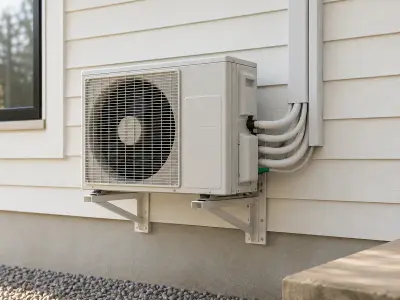
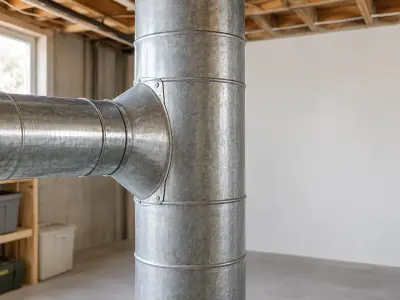

Compare costs
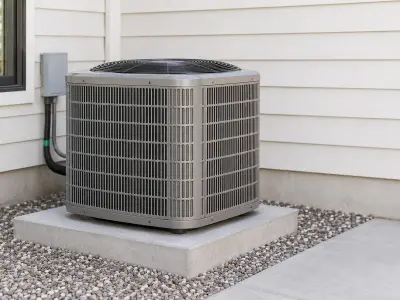



Running cost of what you already have



How these calculators work
Two numbers decide what cooling costs you: how big the equipment is, and how many hours it has to work. Both depend on where you live.
Size starts from the ENERGY STAR rule of 20 BTU per square foot, which we scale by your state's climate zone: 1.3 times in zone 1 (Hawaii), 1.2 in zone 2 (Texas, Florida, Arizona), down to 0.8 in the coldest zones. Then the room matters: sun, a kitchen, people, a high ceiling, an uninsulated garage door, a basement against cool earth. An oversized unit isn't a safe bet. It cools fast, shuts off before it has dried the air, and leaves the room cold and clammy.
Hours come from your climate zone too. A central system in zone 2 runs the equivalent of 2,000 full-load hours a year; in zone 5 it's 800. That's why the same efficiency upgrade pays back so differently. In Florida, going from SEER2 13 to SEER2 18 on a 4-ton system saves an estimated $307.69 a year at 15.0¢/kWh. In Michigan, a 14-to-16 upgrade on 2.5 tons saves about $41.79.
Then there's the question of what you cool. Two 8,000 BTU window units running 8 hours a day cost an estimated $64.23 a month at the US average rate; a 3-ton central system costs $113.55 for the same hours. Cool the whole house with window units, though, and central air comes out ahead.
Every calculator here shows its formula and its sources: ENERGY STAR and ACCA for sizing, AHRI for SEER2, DOE for CEER and dehumidifier ratings, the EIA for your state's electricity rate. These are estimates: for a whole-house system, an installer's Manual J load calculation is the number to buy on.